

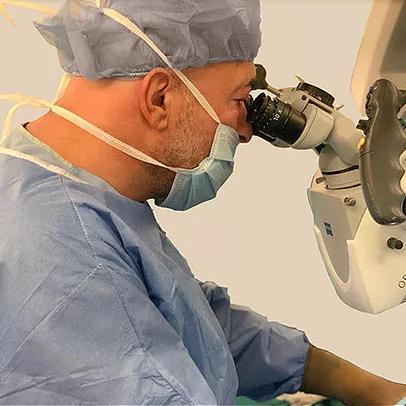
Microsurgical varicocele surgery, when performed by experienced hands and under a microscope, is the method with the highest success rate and lowest complication rate. After initiating the first microsurgical varicocele surgery in Turkey, I observed that many patients had inadequate previous surgeries and required corrective microsurgery. This is why I have been exclusively performing microsurgical varicocele surgery for the last 20 years.
In more than 6000 microsurgical varicocele surgeries I have performed in the last 20 years, the technical success rate is over 99%. The rate of serious complications is 0%, and the rate of minor complications such as simple wound infection is 1-2%. Sperm test values have increased in more than 90% of my patients, and many have achieved pregnancy.
Varicocele is a vascular disease caused by the enlargement of the veins around the testicle. It is usually seen in the left testicle and can be a cause of infertility in men.
Varicocele occurs due to the insufficiency of valves in the testicular veins, resulting in backflow of blood and enlargement of the vessels. It is more common in the left testicle due to anatomical reasons.
Varicocele can cause infertility, testicular shrinkage, pain, decreased testosterone, and stunted testicular growth during adolescence.
Varicocele diagnosis is made by manual examination from an experienced urologist. Ultrasound is only used as a supporting examination. Varicocele not detected by manual examination should not be surgically treated.
Microsurgery is the most successful method with the fewest complications in varicocele treatment. With microsurgical surgery performed by experienced hands, the success rate is very high and the risk of recurrence is low. With this method using a microscope, vessels, lymphatic channels, and the testicular artery are clearly visible. Thus, only diseased veins are ligated and healthy vessels are preserved.
If the surgeon does not have sufficient experience or is in training, using a microvascular doppler to distinguish arteries can be beneficial.
Microsurgical varicocele surgery is not a simple operation; it is only successful in experienced hands with special microsurgical training. The risk of complications is high in inexperienced hands.
Varicocele does not recur after a correct and complete microsurgical varicocele surgery. In inadequate surgeries, varicocele may persist and corrective surgery may be required.
It is not appropriate to directly turn to assisted reproductive methods such as IVF, ICSI, or insemination in men with detected varicocele. Varicocele increases the DNA Fragmentation Index (DFI) of sperm, reducing fertilization capacity. Even if fertilization occurs, it significantly increases the risk of early miscarriage. Many couples who have experienced repeated failures in assisted reproductive techniques can achieve pregnancy naturally or with much less intervention after microsurgical varicocele surgery. Therefore, varicocele treatment must be evaluated before assisted reproductive methods.
After microsurgical varicocele surgery, the vast majority of patients experience improvement in sperm parameters and an increased chance of having a child. The success rate varies depending on the patient's condition.
Patients are usually discharged the same day after surgery. Daily activities can be resumed quickly. Full recovery may take a few weeks.
After varicocele surgery, patients are advised to avoid heavy physical activities, sports exercises, and sexual intercourse for 1–2 weeks. The surgical area should be kept dry and clean, dressings should be done regularly, and caution should be taken against possible signs of infection. Pain, edema, or hematoma that may occur in the postoperative period is usually temporary. However, if high fever, severe pain, or significant swelling in the testicles develops, a physician should be consulted.
The purpose of surgery for varicocele treatment is to close two of the three venous systems of the testicle that cause problems, allowing dirty blood to return to the heart only through the healthy third system. During this process, the testicular artery and lymphatic channels are carefully preserved.
While the testicles develop in the abdomen, they descend into the scrotal sacs before birth. As they descend, they use the same pathways for venous blood return. Just like in leg veins, there are valves in these vessels that ensure blood flows back to the heart. However, when these valves in the testicular veins are weak or insufficient, blood flows back and accumulates, causing the vessels to enlarge. This condition is known as "varicocele."
Varicocele does not directly cause erectile dysfunction in men, but over time it can reduce testosterone levels by affecting the testicles. Due to varicocele-related testosterone reduction, decreased sexual desire and reduced sexual performance may also be observed.
Dirty blood from the testicles is removed from the body through three venous systems. The internal spermatic vein is the main vein, passing through the inguinal canal and draining into the left renal vein on the left or directly into the vena cava on the right. The external spermatic vein accompanies the vas deferens and drains into the iliac vein. All branches of these two vein systems are carefully ligated during surgery. The vasal vein pair, the third system, is preserved for healthy blood drainage from the testicle.
In surgeries without microsurgery, lymphatic channels and arteries cannot be distinguished by the naked eye and may be accidentally ligated. This increases the risk of varicocele recurrence to 40% and the hydrocele rate to 20%. With the microsurgical method, varicocele recurrence drops below 1%, and hydrocele and arterial damage are not seen.
Microsurgical varicocele surgery generally takes approximately 1–1.5 hours. The duration may vary depending on the patient's vascular structure and the degree of varicocele. Patients are generally discharged the same day or the next day.
After microsurgical varicocele surgery, patients are generally advised to refrain from sexual intercourse for approximately 10–14 days. This period is important for healthy healing of the surgical site. After recovery, patients can return to their normal sexual life. Varicocele surgery does not negatively affect sexual functions, and improvement in sperm production is generally seen in sperm analyses performed 3–6 months after surgery.
Diagnosis and treatment of urological diseases
Male reproductive health and infertility treatment
Microsurgery in varicocele and male infertility treatment
Diagnosis and treatment of male sexual health issues
At Acibadem Fulya Hospital located in Besiktas, Istanbul.